
Discussions
New York Times Wordle: A Comprehensive Overview
Introduction
Wordle, now owned and hosted by The New York Times (NYT), is a simple yet addictive daily word puzzle that has captured global attention. Players have six attempts to guess a five-letter target word. After each guess, the game provides feedback: a correct letter in the correct position turns green, a correct letter in the wrong position turns yellow, and an incorrect letter turns gray. Though straightforward, Wordle combines vocabulary, deduction, and strategy, creating rich player engagement.
Origins and Evolution
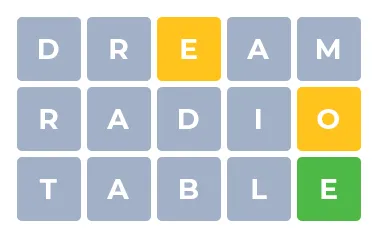
Wordle was created by Josh Wardle in 2021 as a personal project and released publicly in October 2021. Its meteoric rise was driven by social sharing on social media — the game’s emoji grid allowed users to share results without spoilers. In January 2022, Wardle sold Nyt Wordle to The New York Times, which integrated it into its Games section while preserving the core gameplay and the daily puzzle cadence.
Gameplay Mechanics and Strategy
Starting words: Choosing an optimal first guess is debated. Common strategies favor words with high-frequency vowels and consonants (e.g., “CRANE,” “SLATE,” “AUDIO”). Others prefer vowel-heavy starters to quickly rule in/out vowels.
Information theory: Good guesses maximize information gain. Early guesses should test multiple common letters to narrow possibilities.
Positional deduction: After feedback, players refine candidate lists by tracking letter frequency, positional constraints, and eliminating impossible combinations.
Hard mode: Wordle’s hard mode forces players to reuse revealed letters in subsequent guesses, raising difficulty and rewarding disciplined deduction.
Cultural Impact
Wordle influenced daily routines, social interaction, and even language appreciation. It spawned numerous clones and spinoffs (e.g., Quordle, Heardle, Dordle) and inspired research on human problem-solving and pattern recognition. The simple format encouraged communal play: friends comparing scores, workplaces holding mini-tournaments, and media outlets covering streaks and strategies.
Critiques and Controversies
Accessibility and inclusivity: Wordle’s five-letter constraint favors languages with certain morphological patterns; non-native English speakers or those with smaller vocabularies may find it harder.
Repetition and predictability: Some players criticize the limited daily puzzle approach, craving more variety or multiple daily puzzles.
Commercialization concerns: After NYT’s acquisition, there were worries about monetization, feature changes, and potential paywalls, though core play remained free.
Algorithmic bias in word selection: The curated word list sometimes includes obscure words, causing frustration. Conversely, removing slang or offensive words raises debates about editorial choices.