
Discussions
Wordle (NYT): A Brief, Balanced Exploration
Wordle, acquired by The New York Times in 2022, is a simple daily word puzzle that became a global phenomenon. Players have six tries to guess a five-letter English word, receiving color-coded feedback for each guess: green for correct letter and position, yellow for correct letter wrong position, and gray for absent letters. Despite its minimal rules, Wordle sparked widespread engagement, debate, and cultural impact. This article examines why Wordle succeeded, critiques and challenges it faces, and its broader implications.
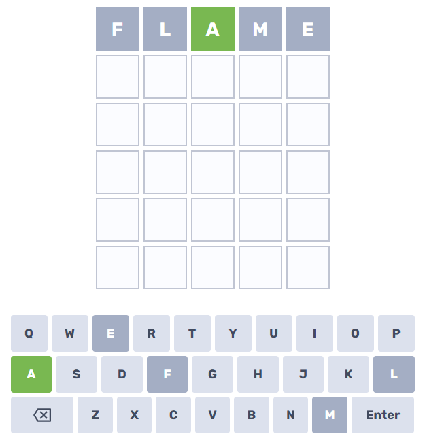
Why Wordle Resonated
Accessibility and simplicity: The rules are immediate and require no tutorial. A single puzzle per day encourages brief, repeatable engagement without the time sink of many games.
Shared experience: The daily common puzzle created a unified conversation. Easy-to-share emoji grids let players compare strategies and outcomes without spoilers, fostering community and social media virality.
Cognitive satisfaction: Wordle taps pattern recognition, vocabulary knowledge, and deductive reasoning. The feedback loop provides small, regular rewards that motivate return visits.
Low friction and design: A clean interface, no ads in the original experience, and cross-platform playability made it widely approachable.
Design strengths and subtle mechanics
Constrained play (one puzzle per day) adds scarcity, increasing perceived value and ritualization.
Deterministic puzzle: Everyone solves the same word, preserving social comparison.
The puzzle’s difficulty is tunable via wordlist curation; NYT’s stewardship aimed to refine vocabulary balance and fairness.
Critiques and Limitations
Vocabulary bias: Word lists can privilege certain dialects, education levels, or cultural exposures. Rare or obscure words create frustration; common words can feel trivial.
Accessibility concerns: Non-native speakers, players with dyslexia, or those with limited literacy may find Wordle less inclusive. Color coding poses challenges for color-blind players, though many implementations add patterns or alternatives.
Addictive ritual vs. healthy habit: While brief, the daily ritual can become compulsive for some, who feel pressure to maintain streaks or compare publicly.
Monoculture and comparability: Because everyone shares one puzzle, the social metric (who solved faster/fewer guesses) can foster unnecessary competition or shaming.
Variants, derivatives, and cultural offshoots Wordle inspired hundreds of clones and spin-offs: different word lengths, multiplayer modes, theme-based puzzles (math, music, geography), and educational variants for vocabulary learning. Some derivative games expanded accessibility (hints, multiple puzzles) or targeted niche interests (e.g., “Worldle” for geography). This creative proliferation demonstrates both the concept’s versatility and the demand for tailored experiences.
NYT acquisition and commercialization The NYT purchase professionalized Wordle’s operation—introducing curated wordlists and integrating it into a broader puzzle portfolio.